Dr. Annette Lamb’s Information Inquiry Elements and the Ws (Watching, Wondering, Webbing, Wiggling, Weaving, Wrapping, Waving, and Wishing) of Information Exploration and Inquiry detail a process of narrowing and selecting information. In discovering an information need, I begin by making observations and asking questions. Hence, the first stage is watching.
Watching
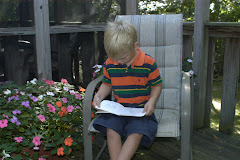
Over the past week I brainstormed topic ideas by observing and exploring. I became more perceptive to the world around me. This naturally led to Lamb's step of reading and viewing. Therefore, I read online, pondered relevant personal issues, and considered ideas that were in-depth, fun, controversial, and practical. What I discovered is that I am most interested in issues pertaining to children. Through observation, I notice that my house is littered with various beginning books for my kindergarten student who is just learning how to read. This sparks an idea of early literacy. I jot ideas and brainstorming questions.
The term “early literacy” led me to consider what exactly is early literacy? What is the difference between early literacy and emergent reading? How has emergent reading impacted the teaching of literacy? How does understanding early literacy affect expectations of parents? What are literacy skills and what role do they play in language arts? Some possible ways to concur with others is to consult kindergarten, preschool teachers and reading specialists, the Web, professional articles, and national literacy groups. Basic key word searches: early literacy, emergent reading, phonemic awareness, and phonics. Some possible narrowing topics: reading development, nursery rhymes and early literacy, children’s literature.
As I pause to reflect during Lamb's step of contemplation, I have mixed feelings about this topic. Although early literacy is a topic that I have tremendous zeal, I am hesitant to pursue this idea based on the enormous and redundant information available. I continue to explore other ideas.
I am also fascinated with the study of psychology, especially how it relates to children's learning styles. The book, The Hidden Gifts of the Introverted Child by Marti Olsen Laney influenced my understanding of introverts. As I skim sources, the ideas race. I write down what Lamb refers to as a writing step. What classifies a person as an introvert? How many introverts are there in the United States and how is this determined? Are there personality tests and brain research to document findings? Is being introverted genetic? How does an introvert thrive in a classroom? What are the challenges in a classroom for the introvert? How does the teacher's being introverted or extroverted impact introvert and learning? What are interpersonal dynamics within family relationships between parents and siblings of those who are and who are not introverts? How does an introvert move through developmental stages? What kinds of physical, social, and emotional issues experienced by introverts? How can parents and teachers meet these needs? What is the connection between children’s literature and introverts? How does an introvert approach the inquiry process compared to an extrovert? For instance, is there a difference in how information is assimilated? Does an introvert more easily master self-reflection? How does physical space affect an introvert’s learning? How do introverts handle stress? Is there a different approach in resolving conflict between two introverts or one introvert and one introvert? Is there research that supports teaching styles or techniques that work best for introverts? Key word searches: temperament, psychological types, unique childhood traits, inborn traits, personality type or traits, learning preferences and differences, learning styles.
In order to collaborate my ideas and opinions with others in my field, I read books for basic information, explore online, and read Blogging from Eduscraping. In reflection, the main drawback is getting bogged down with physiological descriptions, psychological terms, and test explanations. I am uncertain if I should attempt this topic also. I realize at this point that my frustration is a common experience in the inquiry process. "Kahlthau found that 'uncertainty, a natural and necessary aspect of the early stages of the information search process (ISP), causes discomfort and anxiety which in turn affects articulation of a problem and judgments of relevancy" (Curriculum Connections, p.147).

Subscribe to:
Post Comments (Atom)


No comments:
Post a Comment